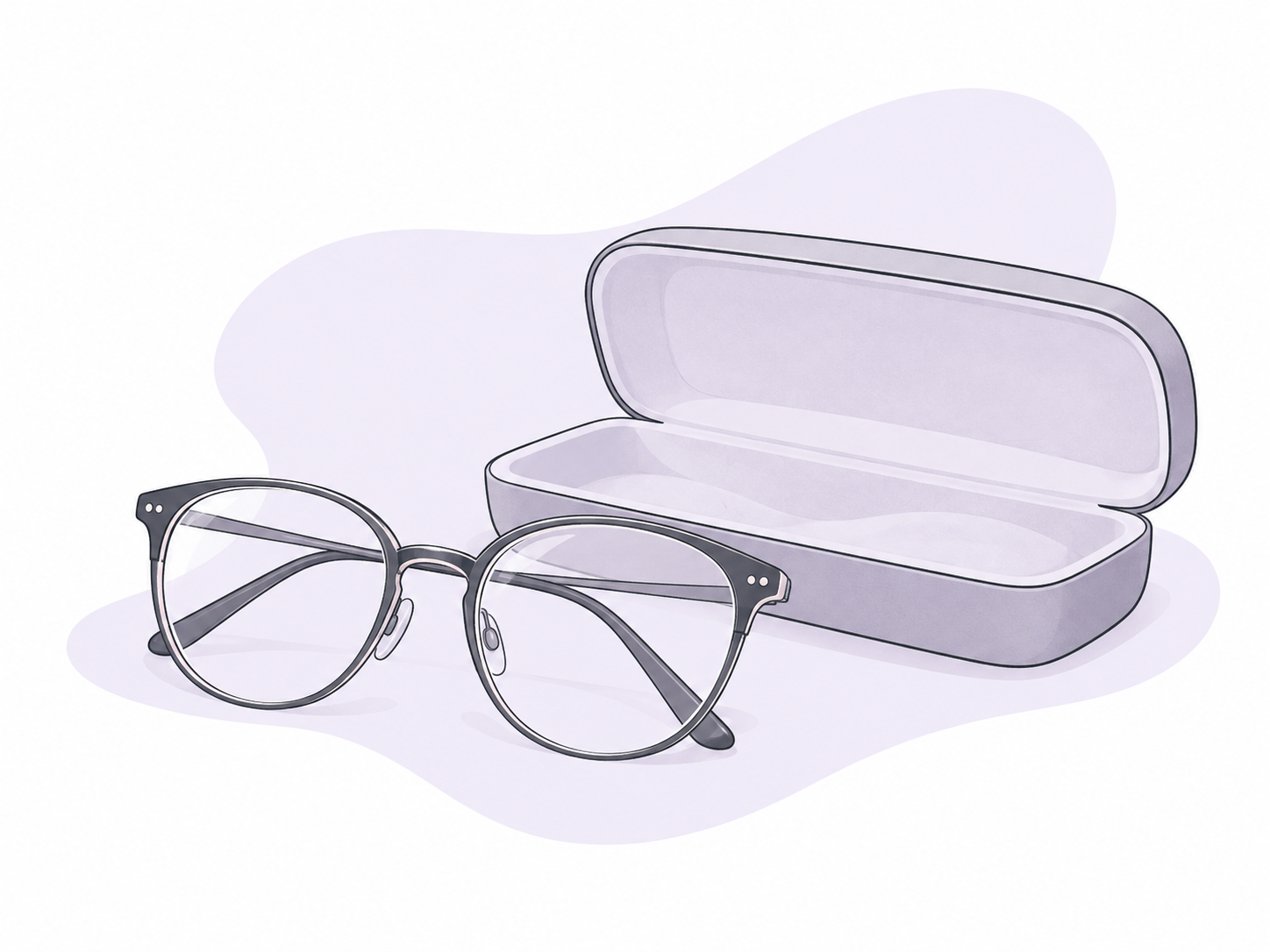



Your glasses prescription describes the correction for each eye. The most important ordering habit is simple: copy each value exactly, including its plus or minus sign, and keep right and left eyes separate. This guide explains the labels; it does not calculate a prescription or replace an eye examination.
A sample prescription, explained visually
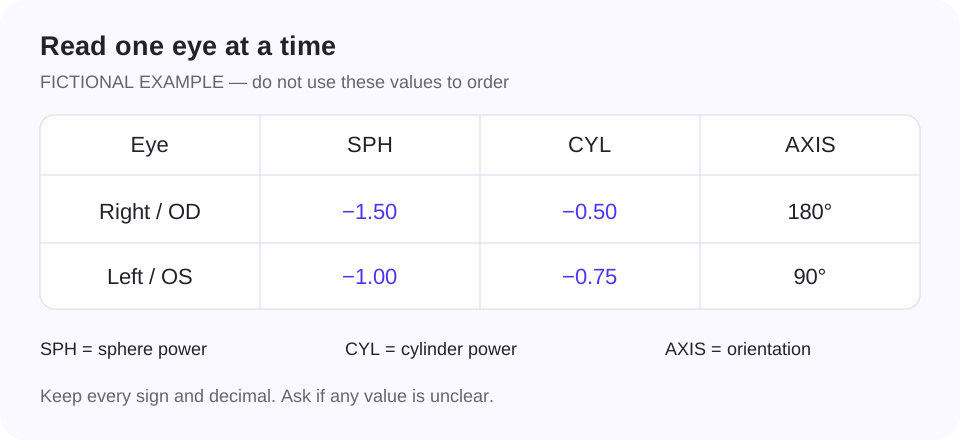
| Label | Meaning | What to check when ordering |
|---|---|---|
| OD / R | Your right eye | Copy it into the right-eye row, not the right side of a mirror image. |
| OS / L | Your left eye | Check this row separately even if the numbers seem similar. |
| SPH | Sphere: lens power in dioptres | Keep the sign. Minus and plus values are not interchangeable. |
| CYL | Cylinder: correction for astigmatism | Copy both the value and its sign. |
| AXIS | Orientation of the cylinder correction, in degrees | It accompanies a cylinder correction; it is not another power value. |
| ADD | Additional near power when prescribed | Do not invent it or replace your distance SPH with it. |
| Prism / Base | A prescribed alignment correction and its direction | Ask the optical team to review these instructions before ordering. |
Minus sphere commonly indicates short-sighted correction and plus sphere long-sighted correction. Cylinder may be written in plus or minus notation; do not convert between the two yourself. “Plano” or “PL” means zero sphere power, but other prescribed values may still be present. See Specsavers’ prescription explanation and the Association of Optometrists’ prescription guide.
PD: where your lenses need to line up
Pupillary distance (PD) measures the spacing between the centres of your pupils in millimetres. It helps position the lenses correctly in front of your eyes. It may be supplied separately from the prescription.
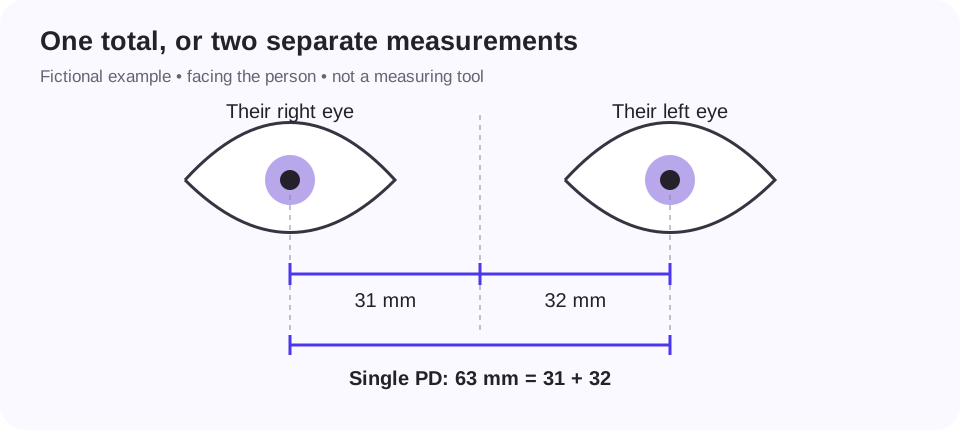
Single PD is one total measurement. Dual PD gives a separate measurement for each eye. If your order uses dual PD, both fields need the corresponding measurements. Do not enter one value twice unless your measured right and left values really are the same. The Cleveland Clinic explains PD and its role in fitting glasses.
Distance and near measurements can differ. Use the measurement appropriate for the lenses being ordered. If PD is missing, unclear or inconsistent, ask an optician to measure or confirm it. Progressive lenses can require additional fitting measurements; a total PD alone does not describe every aspect of their fit.
How to enter or upload your prescription
- Check the document: use a clear, current prescription for glasses.
- Choose the correct entry method: type values only if you can read them confidently; otherwise upload a clear image for review.
- Check each eye: compare SPH, CYL, AXIS and any ADD values line by line.
- Check PD: use single or dual measurements as supplied.
- Review the summary: make sure the product, lens choice and prescription belong together before adding to cart.
Pause if something does not match
- A non-zero CYL is written but AXIS is missing.
- A value has no readable plus or minus sign.
- The form does not support your prism or other special instructions.
- You only have one measurement for a dual-PD entry.
Ask for clarification instead of guessing. Glasses and contact lens prescriptions are not interchangeable: the AOA explains why contact lenses require separate care and fitting.
Continue with our lens options guide, or choose a frame once your information is ready.